

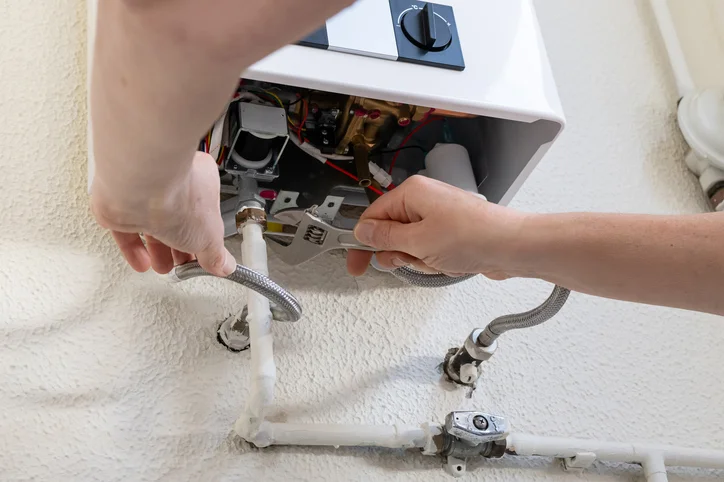
Deciding how your home heats water is a major choice that directly impacts your utility bills and daily comfort. Selecting the ideal water heater in Falmouth, MA requires striking a balance among upfront installation costs, your home's energy efficiency goals, and your household's daily hot water needs. While conventional storage tank systems have long been the go-to choice, modern on-demand units are quickly becoming a favorite among property owners across the Cape.
To help you make a confident decision, The Fuel Company breaks down the key pros and cons of converting to a tankless hot water system.
The Pros of Tankless Water Heaters
Upgrading to an on-demand heating unit offers several major benefits that can elevate your routine and reduce long-term operating costs.
Continuous Hot Water: Rather than heating and storing a fixed volume of water that can run out after back-to-back showers, tankless systems instantly heat water as it flows through the heat exchanger.
Lower Energy Bills: By eliminating standby energy losses—the power wasted keeping 40 to 50 gallons of unused water hot 24/7—on-demand units use significantly less fuel or electricity.
Compact Footprint: Wall-mounted tankless units take up virtually no floor space, freeing up valuable room in small basements, utility closets, or mechanical rooms.
Extended Service Life: A well-maintained tankless unit often lasts 20 years or more, easily outlasting traditional storage tanks, which generally average 10- 12 years.
The Cons of Tankless Water Heaters
Despite their impressive performance advantages, tankless systems also come with a few potential drawbacks worth considering.
Higher Initial Investment: The purchase price and technical installation costs for an on-demand system are higher upfront than swapping in a basic replacement tank.
Infrastructure Upgrades: Transitioning to tankless often requires expanding gas supply lines, upgrading electrical service, or routing new specialized venting to support the unit's high energy demand.
Flow Rate Restrictions: If multiple high-demand fixtures run at once—such as two showers and a washing machine—a single unit may struggle to meet total output demands unless sized correctly.
Find the Ideal Solution for Your Home
Determining whether an on-demand water heater or a traditional storage unit is best for your home comes down to your family size, peak water usage, and budget goals. An experienced technician can assess your home's setup and guide you toward a system that provides maximum efficiency and reliability. Ready to upgrade your home’s hot water performance? Reach out to the knowledgeable team at The Fuel Company today by calling (508) 299-5660 to get expert advice and a free estimate.